Loop-to-Lead
Your best people are getting read wrong. It's costing you the ones you most want to keep.
Most organisations don't lose strong talent because it stopped performing. They lose it because capable people keep getting read as reliable instead of ready. And eventually, they stop waiting to be seen.
I run workshops that help teams see this pattern clearly, and change it.
The people who deliver are not always the people who get seen
You have people who take on the hard projects. Who keep things moving when it matters. Who get handed responsibility because you trust them with it.
Some of them are quietly on their way out. Not because they are not good enough, but because their work keeps getting read as "dependable" rather than "leadership," and no amount of delivering seems to change it.
When they leave, it looks like a personal choice. A different priority. A better offer.
Often it is something else. A capable person who ran out of reasons to believe this place would ever see them differently.
I call this a leadership recognition problem: the gap between someone demonstrating leadership and an organisation recognising them as ready to lead.
The problem is not simply bias. It is how leadership gets interpreted.
Where the reading goes wrong
It is tempting to hear this as “our managers are biased.” But that framing is too blunt to show you where to intervene.
What is happening is more ordinary, and more fixable.
Every organisation runs on two quiet mechanics: who gets their contribution seen by the right people, and who gets trusted with the next opportunity.
Connecting the two is a step most processes treat as objective and rarely examine: the meaning that gets attached to what someone did.
The same contribution gets read as “strategic” from one person and “supportive” from another. The same caution reads as “thoughtful” or as “not ready,” depending on who is being cautious. It gets harder still for people who do not fit the familiar picture of who becomes a leader.
Your process did not decide this on purpose. It just never had a reason to look at the step where it happens.
Why this matters for your pipeline
When that step goes unexamined, it does not stay an individual frustration. It turns into three things you can measure.
Capable people burning out. Doing more to prove they are ready, getting more responsibility, and never getting repositioned by it.
Capable people going quiet. Still delivering, but no longer trying to be seen, which then gets read as lower ambition.
Capable people leaving. Taking the capability you helped develop somewhere that reads them differently.
Over time, the way someone is read can begin to affect how they perform. Greater scrutiny, fewer second chances and repeated misrecognition can make people more cautious, less willing to take risks and less certain of the value of their own contribution.
Those responses can then be read as further proof that the original judgment was right.
When that ends in departure, it becomes a pipeline leak. It is the most expensive consequence because it looks like everything except what it is.
Who this work is for
This work is relevant for organisations seeing strong performers stall, disengage or leave; talent and leadership teams examining how potential is identified; and employee networks looking for more than generic advice about confidence and visibility.
The workshop
This is the core of what I do with organisations.
In a Loop-to-Lead™ workshop, a team works through the pattern using their own real situations. Not a lecture on bias. Not theory. People look at how contribution actually gets read inside their organisation, where good work gets miscategorised, and where the cost is quietly adding up.
It is built so a whole team sees the same mechanism at the same time, from where they each sit.
The people who have felt this pattern start to understand what has been happening to them, and why more effort did not change it. The people who manage and promote start to see how the reading gets formed, often without anyone deciding it. And both begin to see how the two shaped each other over time, until it is no longer clear what came first.
That shared view is the point. Not one side learning it was right and the other learning it was wrong, but everyone seeing the same machine, and how it worked on all of them.
Everyone leaves with the same thing. A shared language for something that was happening in the room the whole time, and that no one had words for.
What a group leaves with
A clear read on how work gets turned into reputation inside their organisation.
The specific points where capable people get miscategorised.
One real situation, reframed, that they can act on.
Language they can use in the next meeting, the next review, the next promotion conversation.
Workshops run in person, and are shaped to your team and your context. Available in Dutch and English.
The method behind it
The workshop is built on Loop-to-Lead™, a framework I developed for understanding how recognition actually works inside organisations. Why some capable people keep getting more responsibility while the opportunities they want stay out of reach.
It grew out of years of work in coaching, in organisations, and on stage, and it brings a systems lens to something usually treated as personal. It is grounded in research on influence, perception, and how leadership gets recognised.

Keynotes and talks
I speak at conferences, summits, panels, and network events on why good performance does not always lead to leadership, how strong performers get overlooked, and how recognition really works inside organisations.
A talk gives an audience a new way to see something most of them have experienced but never had words for. People walk away recognising the pattern and understanding that it is not just them, and not just bad luck.
One question runs underneath all of it: how do organisations recognise leadership when it does not look like the leadership they already know?
And for the professionals affected by it: can you step into leadership on your own terms, without becoming someone you are not?
Most advice addresses one side or the other. My work looks at what happens between them.
Topics include why strong performers plateau, how contribution gets misread, and how to build influence without formal authority.
See the pattern in action
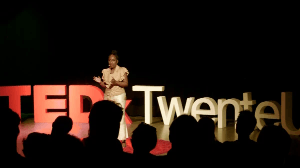
In this excerpt from my TEDx talk, I demonstrate what happens when one person repeatedly receives trust and opportunity, while another becomes less and less visible as a leader.
Working with individuals
I also work directly with professionals who recognise this pattern in their own careers, in a focused one-to-one session. If that is what brought you here, you can read about it on the Loop-to-Lead™ Session page.

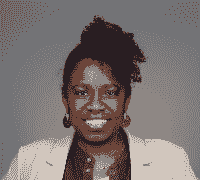
I'm Phaedra
I help organisations understand why good work does not always lead to the opportunities people expect, and why capable talent gets read as support rather than leadership.
I'm the author of De Macht van Invloed and a speaker on leadership, influence, and the hidden patterns that shape who gets recognized as leadership material.
This work grew out of a question I kept seeing in coaching conversations, organizations, and on stage:
Why do some capable professionals keep getting more responsibility, while the opportunities they want remain out of reach?
That question led me into years of research into influence, perception, and leadership.
What I found was this:
Often the issue is not a lack of talent or ambition.
It's a pattern in how people are seen, trusted, and moved forward.
That became the basis for Loop-to-Lead™: a practical way to understand what's happening and choose a more effective next move.
Start with a conversation
Every organisation's version of this is a little different. The best place to start is a short conversation about what you are seeing in your team.
©2026 Loop-to-Lead™